
MMHS
  • Home
  • Blog
    • The Playful Therapist Blog
  • Courses
    • Online Courses and Training
    • Speaking
  • Supervision
    • Supervision | Consultation
  • Resources
    • Downloads

3 Tips for Self Care In Your Practice

1/29/2026

0 Comments

 
Picture

Self-Care Isn’t Just After Work: What Therapists Often Miss

When you think of self care as a therapist what comes up?

I mean we teach self-care all the time to clients, so we should definitely be expert level in our own lives? Right? *Sweats nervously*
Mostly it’s what you do outside of your workday when you shut your laptop and head out the door.  Maybe it’s taking a walk after work, chatting with a friend (or a virtual coffee date) or even bigger things like getting a massage or having someone (that isn’t you) deep clean your car - IYKYK. 

But what if some of the most impactful self-care for therapists actually happens during the workday -- right between sessions?

As therapists, we often overlook how much our regulation during the day affects our energy, presence, and burnout levels. I want to share three very unglamorous, buuuut very practical self-care habits I use daily to stay more regulated during my therapy day.

Because the glamorous part of being a play therapist is getting to wear the sparkliest tiara in the playroom.

And these self-care tips? Spoiler alert - none of them involve bubble baths.
​

Why Self-Care for Therapists Can’t Wait Until After Work


​Many therapists ask:
  • Why do I feel so dysregulated by the end of the day even when I “practice self-care” on the weekends?
  • Why does self-care feel like another thing on my to-do list instead of something that actually helps?
  • How do I stay present with clients when my brain is overloaded?

The answer often isn’t that you’re doing self-care “wrong.” It’s that self-care only after work doesn’t address the mental load you’re carrying all day long.

Let’s talk about what actually helps during your workday.​

Keep Up With Paperwork to Reduce Therapist Stress

Paperwork isn’t just an administrative task — it directly impacts therapist stress, nervous system regulation, and burnout risk.
​

So…if you’re really honest with yourself -how often do you have a pit in your stomach when you know there is a stack of notes waiting for you in the morning?  

And for you it might be a little bit more than a stack… maybe a mountain? 

It’s that feeling that makes you want to keep going by your office and set up camp at a local coffee shop for the day sipping some great brew.  But the paperwork is still waiting for you and can create significant amounts of tension and stress.

 That looming paperwork creates background stress all day long. You might be able to push it aside during sessions, but your nervous system still knows it’s there — quietly increasing tension, avoidance, and fatigue.

Why this matters for self-care:
Unfinished notes keep your stress response activated. When paperwork piles up, it steals regulation before, during, and after sessions.
Self-care here isn’t about perfection — it’s about reducing cognitive load so your system can breathe.

Your Paperwork Toolkit: 
→ Grab your FREE ultimate play therapy documentation and notes guide with 15 FREE resources for writing better and faster play therapy notes. 
→ Level up your play therapy progress notes and documentation.
→  Learn to write progress notes in 5 minutes or less.

Reducing Mental Load by Returning Calls and Emails

Ah yes… the emails you’ve been avoiding.  The clinical coordination calls you keep meaning to schedule.
Just thinking about them can cause that heart-pounding, sweaty-palm feeling. Even when you’re fully present in session, those unfinished tasks hover in the background. 
​

They sneak into transition times, lunch breaks, and the drive home — quietly draining your energy.

Why this matters for therapists:
Avoided tasks don’t disappear. They live in your nervous system as unresolved stress.  Sucking energy from your life like the 500 tabs open on your computer. 
​

Returning calls and emails — even in small, scheduled blocks — is a form of workday self-care that restores a sense of control, containment, and keeps your professional reputation intact. 

Your Coordination Toolkit: 
→  Set better boundaries with your parent phone calls.
→  Set better boundaries with parent emails.
→  Level up your  new client intake process like a pro and reduce admin stress
→ Download this client referral template to decrease administrative time on referrals 
​

How a To-Do List Supports Regulation for Therapists

Confidential, of course — but trying to hold everything you’re supposed to do between sessions in your head is exhausting.

You’re constantly  juggling documentation, records requests, coordination, and prepping for your next session (hello slime materials!) 

Holding all of that mentally pulls attention away from your clinical work and increases overwhelm. And then… a week later… oops — something important slipped through the cracks.

Why this supports regulation:
A clear, organized to-do list creates external containment. It allows your brain to let go, so you can be more present with clients and feel less drained at the end of the day.


To-do list toolkit: 
→ How to create a to-do list that actually helps as a therapist 
→ a pen and paper (if you’re old school like me!)
→ Google Tasks or Google Docs (HIPAA Compliant of course) 
→ Get a genuine dopamine hit when you cross allll these items off your to-do list! 
​

Self-Care for Therapists Happens Between Sessions

These habits aren’t glamorous.

They won’t show up on Instagram.

But they are some of the most effective forms of self-care for therapists, because they support regulation during the workday — not just recovery afterward.

And yes… all three are even better with a good cup of coffee in hand.

Need Support With Paperwork and Documentation? ​

If paperwork is the piece that creates the most stress for you, I created The Five Minute Note to help.

This program walks you step-by-step through completing progress notes between sessions, so documentation doesn’t follow you home or live rent-free in your nervous system.
​

And if you need more - grab The Therapist Documentation Bundle that holds full support for both documentation and scheduling. 

​
Picture
Picture

Picture
BLOG | DOWNLOADS + FREE RESOURCES | COURSES ​
Picture


Loading...
0 Comments

Your comment will be posted after it is approved.


Leave a Reply.

    Picture

    Hi, there!

    I'm Ann Meehan, an LPCC,
    ​RPT-S
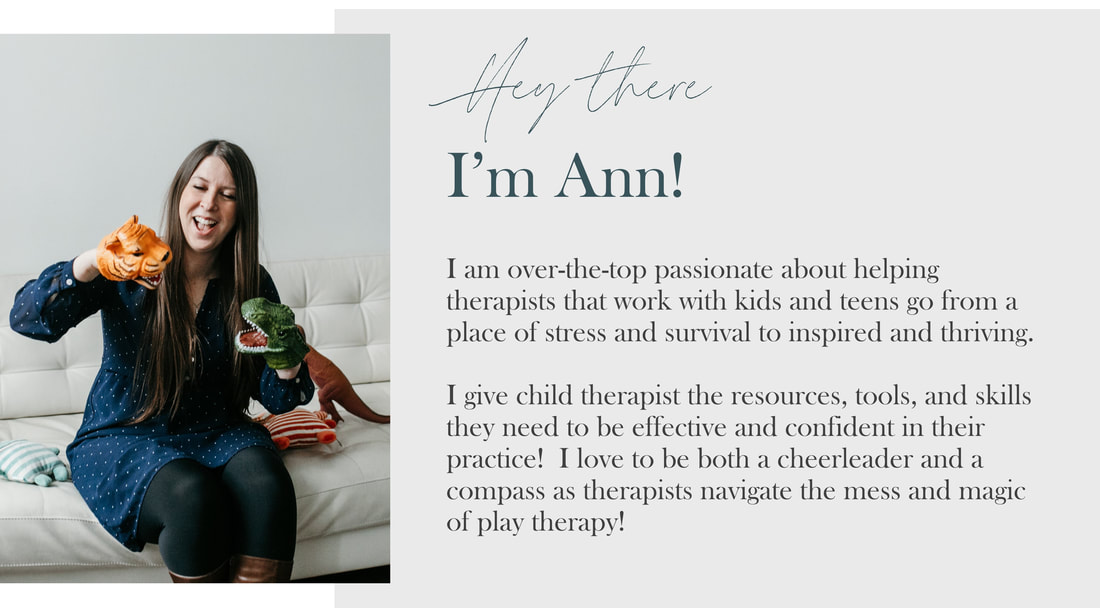
    ™, and EMDR Consultant. I help therapists that work with kids and teens go from a place of stress and survival to inspired and thriving.  I give child therapists the resources, tools, and skills they need to be effective and confident in their practice!

    I am organization obsessed, coffee loving, playful therapist who is showing up for life in the north woods of Minnesota. 

    Picture


    Loading...

    Picture
    Picture
    Picture
    Picture

    Picture

    Picture
    Picture
    Picture
    Picture
Picture
Privacy Policies | Terms of Use  | Disclaimer | Contact
[email protected]
 | Copyright Meehan Mental Health Services 2025
  • Home
  • Blog
    • The Playful Therapist Blog
  • Courses
    • Online Courses and Training
    • Speaking
  • Supervision
    • Supervision | Consultation
  • Resources
    • Downloads