MMHS
  • Home
  • Blog
    • The Playful Therapist Blog
  • Courses
    • Online Courses and Training
    • Speaking
  • Supervision
    • Supervision | Consultation
  • Resources
    • Downloads

How Many Sand Trays Do You Need in Play Therapy? 3 Powerful Reasons to Use Two

3/27/2024

0 Comments


Last Updated: March 27, 2026

Picture
If you’ve ever found yourself wondering “Do I really need more than one sand tray in my playroom? How many is enough?”—you’re not alone.

Between space limitations, cost, and decision fatigue around setup, many play therapists start with just one tray.

And whether you’re just researching your first tray or looking to add another to your collection the opportunities are endless - from standard size trays, to smaller trays, virtual trays, person shaped, heart shaped, or circle.  And with playroom space being a priceless commodity, most play therapists don’t have a full room or endless space to dedicate to the sand tray setup.
​

RELATED RESOURCE: Grab inspiration for the top low cost sand trays to add to your collection ​
But here’s the truth:

Most play therapists benefit from having at least two sand trays available in session.

Not because you have to—but because having multiple trays can dramatically expand the depth, flexibility, and clinical impact of your sandtray work.

Let’s break down exactly why.​

Why Sandtray Setup Matters in Play Therapy

Sandtray isn’t just about the tray—it’s about the container you’re creating for the client’s internal world.

The size, number, and structure of your sand trays can directly impact emotional safety, expression of complex experiences, and the ability to process transitions, trauma, and relationships

A thoughtful sandtray setup allows you to meet clients where they are, rather than forcing them into one format.
​

PLAY THERAPY TOOLKIT: Grab your complete guide to starting sandtray ​

Can You Use Just One Sand Tray?

Yes—you absolutely can.

Many powerful sandtray sessions happen with a single tray.

But here’s where one tray can fall short:
  • When clients need to hold two opposing experiences
  • When comparing past vs present
  • When working with multiple people in session
  • When a large tray feels overwhelming

That’s where having a second tray becomes more than a luxury—it becomes a clinical tool. And in those therapeutic moments when you see the difference two trays can make - you’ll be so glad you made the investment. 

3 Reasons Therapist Use More Than One Sandtray

1. Supporting Dual Processing in Therapy

One of the most powerful uses of two sand trays is the ability to hold two or more separate experiences at the same time. 

This is incredibly powerful when processing two emotional experiences that are both true at the same time, holding two different and distinct environments (like in cases of divorce or home vs. school), time orientation in trauma work of the “past vs. now”, or holding the current and the future. 

With these experiences, sometimes creating these concepts in one larger tray as a “split tray” makes sense, and sometimes it doesn't. With two trays clients can externalize and organize their inner world and experiences more clearly and therapeutically. 

Example prompts:
  • “Create a tray of your life before therapy and one for now.”
  • “Show me what things feel like at mom’s house and dad’s house.”
  • “One tray for what is—and one for what you wish it could be.”

This is especially impactful for children navigating divorce or separation, trauma processing, and widening the window of tolerance.

With two trays clients can experience clearer differentiation and deeper insight. 

RELATED RESOURCE: Grab my FREE download for my top 10 favorite sandtray prompts for kids and teens 

2. Reducing Overwhelm with Smaller Sand Trays

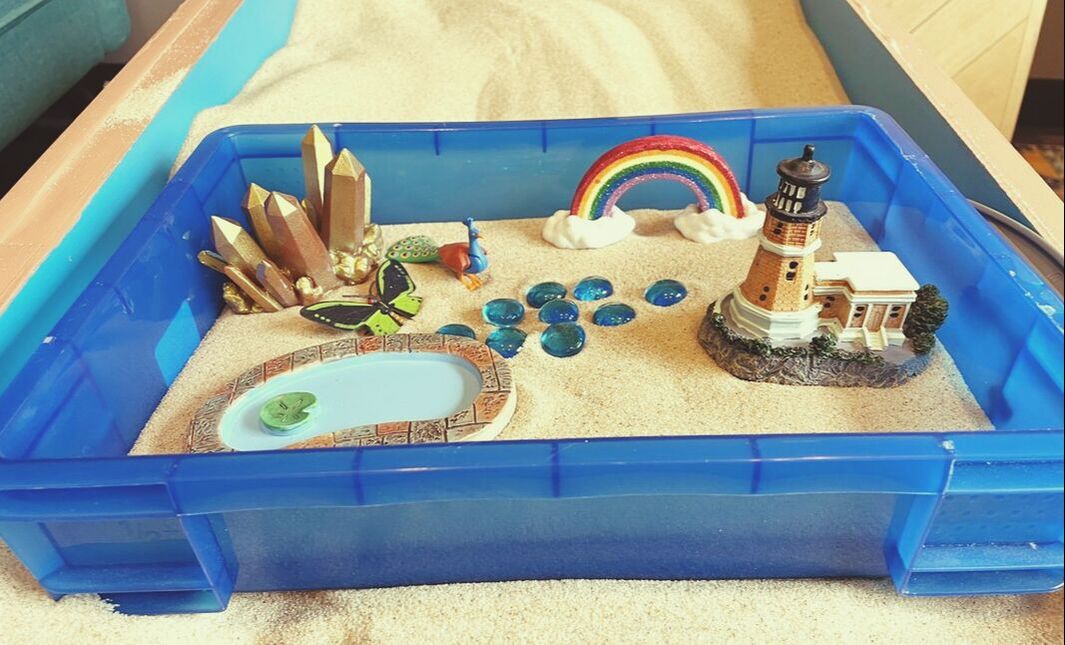
Not every client feels safe with a large, open sandtray.  In my office I have a large sandtray that is typically my go-to for sandtray therapy work.  It is more the traditional standard-ish tray (built from a coffee table with wheels for easy access!)

For some kids (especially those with anxiety or trauma) a full-size tray can feel too exposed, overwhelming, and vulnerable. 

Having a smaller tray option allows clients to have an increased sense of containment and reduced overwhelm.  

Additionally a smaller tray can be incredibly helpful to create a “zoomed in” tray.  These are sandtrays where you might ask a client to recreate one smaller part of a larger tray OR to create one specific part or moment in the world or in the client’s life. 

When given the choice, many clients will naturally gravitate toward the size that feels most regulating to their nervous system.

3. Enhancing Family and Dyadic Sandtray Work

This is where having two trays becomes invaluable. There is incredible value to having families or sibling dyads working within one tray, however one of my favorite and most effective interventions is having family members, parent child dyads, or sibling dyads create their own worlds. 

And for that? They need separate trays.  This is why I have several options for smaller trays (so nobody feels left out if one person in the dyad or family gets the “big tray”). 

Each member having their own sand tray to engage with is essential when it is essential for your intervention that each member maintains autonomy, expresses their own perspective, and for allowing space to engage in relational processing without interference that often comes with working in the same tray. 

Additionally separate trays allows you to more clearly explore similarities and differences, emotional themes, and relational dynamics.  This can be incredibly powerful for attachment work, repair and connection, and perspective taking and problem solving sessions. 

Small vs. Large Sand Trays: Which Should You Use?

Having at least two differently sized sand tray options available in your playroom allows you to have flexibility to be able to meet the client, presenting concern, and presenting concern in the moment. 

Large Sand Tray Benefits:
  • Expansive storytelling
  • Complex scenes
  • Big emotional expression
  • ​
Small Sand Tray Benefits:
  • Containment
  • Reduced overwhelm
  • Easier decision-making

One of the essential pieces in sandtray therapy work with kids, teens, and adults is giving choice, autonomy, freedom, and trust in self.  If you’re wondering what size tray your client might need - my best tip is to ask! Oftentimes when you give your client a choice they will be able to select which tray is right for them. 

Having both available allows you to follow the client’s needs, not force a format.

When to Use Two Sand Trays in Session (Real Examples)

Here’s when I reach for two trays most often:
  • Divorce/separation work → “Two homes” representation
  • Trauma processing → “Then vs now”
  • Goal setting → “Current self vs future self”
  • Family sessions → Individual perspectives
  • Identity work → Different parts of self​

​The flexibility here is what makes your work
more nuanced and more effective.

Budget-Friendly Sand Tray Options for Your Playroom

Let’s address the real concern: cost.

You do not need to spend hundreds of dollars to implement this.

Affordable options include:
  • Plastic storage bins
  • Wooden craft trays
  • Thrifted containers
  • DIY trays

Start simple. Expand over time. The clinical value comes from
how you use the trays, not how expensive they are.

RELATED RESOURCE: Grab inspiration for the top low cost sand trays to add to your collection 

Sand Tray Storage

The next biggest concern? Space. 

When you have multiple sand trays in your collection, finding the right storage is essential.  And, if your office is anything like mine you don’t have expansive square footage just waiting to be filled.  

And if you’re honest - your playroom is likely pretty full as it is. 

The first rule when you think of sandtray storage will really depend on your theory.  If you are a Child Centered Play Therapist you will want at least one tray out and accessible to increase permissiveness. If you are a more directive play therapist or are integrating more than one tray into your play therapy sessions it becomes more flexible. 

Sand tray storage should be accessible enough where within a couple of minutes the sand tray could be available for session.  The main tray in my office is in an “always accessible” format - out and ready but I have several others that are stored in a less accessible format. 

For additional trays you might store them underneath a chair or a couch or in a storage closet out of the office where it is quick to retrieve for more directive work but might not take up valuable space that is needed for other toys and play materials in your office.  You can stack empty trays and keep sand separate in bags or consider a sand tray with lid setup where they can stack with the sand inside.  

I have three small trays that live underneath one of my therapy chairs that stack nice and can be easily accessed.  I also have some additional trays that are open where the sand is stored separately.

The Truth Most Trainings Don’t Tell You

Having the tools is one thing.

Knowing how to use them is what actually creates transformation.
​

Because without structure, prompts, and clinical understanding, even the most beautiful sandtray setup can leave you feeling:
  • Unsure what to say
  • Second-guessing your interventions
  • Wondering if you’re “doing it right”

Ready to Use Sandtray with Confidence?

If you’re ready to move beyond just having sand trays to actually using them with intention and confidence--

Creating Worlds: An Introduction to Sandtray Play Therapy walks you step-by-step through:
  • How to set up your sandtray (without overwhelm)
  • What to say and do in sessions
  • How to interpret themes in client work
  • How to adapt sandtray for different ages and needs

Because the goal isn’t just to have more tools in your playroom— 
It’s to feel confident using them in a way that creates real change for your clients.

Click
HERE to get instant access and start using sandtray with confidence this week.

Picture
Picture

Picture
BLOG | DOWNLOADS + FREE RESOURCES | COURSES ​

Picture


Loading...


*This post contains affiliate links, so I may earn a small commission when you make a purchase through the links on this site.  The best news? It doesn’t cost you a penny!  Thanks for supporting my business by shopping my favorite playroom gear and accessories!! 
0 Comments

Your comment will be posted after it is approved.


Leave a Reply.

    Picture

    Hi, there!

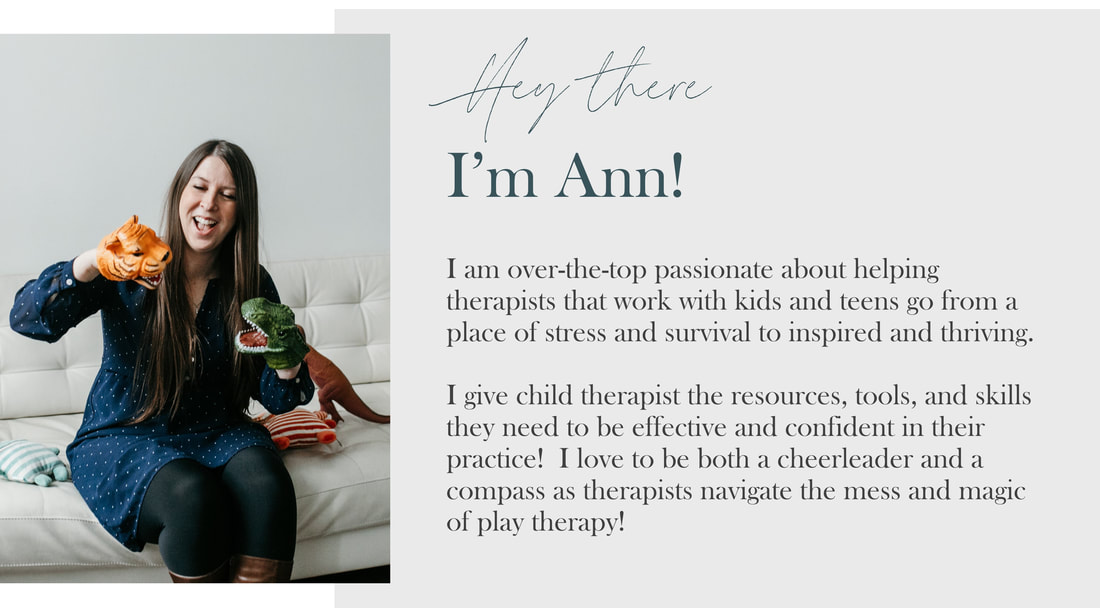
    I'm Ann Meehan, an LPCC,
    ​RPT-S
    ™, and EMDR Consultant. I help therapists that work with kids and teens go from a place of stress and survival to inspired and thriving.  I give child therapists the resources, tools, and skills they need to be effective and confident in their practice!

    I am organization obsessed, coffee loving, playful therapist who is showing up for life in the north woods of Minnesota. 

    Picture


    Loading...

    Picture
    Picture
    Picture
    Picture

    Picture

    Picture
    Picture
    Picture
    Picture
Privacy Policies | Terms of Use  | Disclaimer | Contact
[email protected]
 | Copyright Meehan Mental Health Services 2025
  • Home
  • Blog
    • The Playful Therapist Blog
  • Courses
    • Online Courses and Training
    • Speaking
  • Supervision
    • Supervision | Consultation
  • Resources
    • Downloads